



Drinking has long been treated as one of those ordinary American social habits that barely needs explaining. Dinner, a wedding, a game, a work event, a Friday night. A drink often came with the occasion.
Something is changing.
In 2026, Gallup presented us with a survey in which 54% of U.S. adults say they drink alcohol. That ties 2025 for the lowest level recorded since polling on the question began in 1939.
One record-low year could have been a statistical oddity. Two years at 54% starts to look more like a real shift in behavior.
Let’s go through the survey and see what conclusions we can draw.
Americans Are Drinking Less, and It Is Not Just a Blip
Recent movement has been unusually fast.
In 2023, 62% of U.S. adults said they drank alcohol. That figure slipped to 58% in 2024 and then to 54% in 2025. Before that slide, a drinking rate below 60% had appeared fewer than 10 times across decades of polling.
Previous record territory looked very different. A 55% reading in 1958 had been the old low. At the other end, drinking rates reached 68% to 71% during the period between 1974 and 1981.
Numbers like these matter because habits around alcohol usually do not change overnight. A few percentage points can be dismissed as normal variation. An eight-point fall in two years is harder to shrug off.
Keeping the rate at 54% in 2026 adds another layer. Americans did not simply report drinking less during one unusual year. A historically low level held.
That does not mean America has suddenly gone sober. Nearly half of adults still drink.
But something that once looked unusually common is becoming less automatic.
It Is Bigger Than Gen Z
View this post on Instagram
Gen Z received plenty of attention for drinking less, and there was good reason for it.
Among adults ages 18 to 34, drinking dropped to 50% in 2025 after sitting at 59% in 2023. Younger adults clearly helped move the national number.
The problem is that explanation is now too small.
Declines have spread across age groups. Changes among women have also been especially notable. In 2025, 51% of women said they drank alcohol, an 11-point drop compared with 2023. Among men, drinking fell five points over the same period to 57%.
Calling it a Gen Z story misses what makes the trend interesting now. Younger adults may have moved first, but older groups are no longer sitting still.
Health stories often get flattened into generational stereotypes because those explanations are easy to share.
“Young people do not drink anymore” fits neatly into a headline. A broad decline across age and sex groups is less tidy, but probably more important. Also, young people in the US are lonelier than its peers in some other rich countries.
Health Concerns Are Changing the Conversation
Attitudes about alcohol may be changing even faster than drinking itself. For instance, in 2025, 53% of Americans said having one or two alcoholic drinks a day is bad for health.
That was a record. Comparable readings were 28% in 2018, 39% in 2023, and 45% in 2024. Only 6% in 2025 described moderate drinking as good for health.
A little more than half of adults still considered alcohol unhealthy in 2026. Awareness also appears high. A full 86% said they had heard about recent research on alcohol’s long-term health effects, seven points higher than in 2024.
Medical concern is not coming out of nowhere. Alcohol has been associated with several cancers, along with liver disease and cardiovascular problems.
For years, public discussion around alcohol often included a reassuring question: Could moderate drinking actually be good for you?
Increasingly, Americans seem less interested in finding a health upside.
That shift matters because people do not make health choices based only on official recommendations. They also react to headlines, social-media posts, doctor conversations, cancer warnings, family experience, and whatever new study is circulating that week.
Some online claims will oversimplify the evidence. That happens with nearly every health topic. Still, a large change in public perception can affect behavior even before everyone agrees on every detail of risk.
People Who Still Drink May Be Cutting Back Too
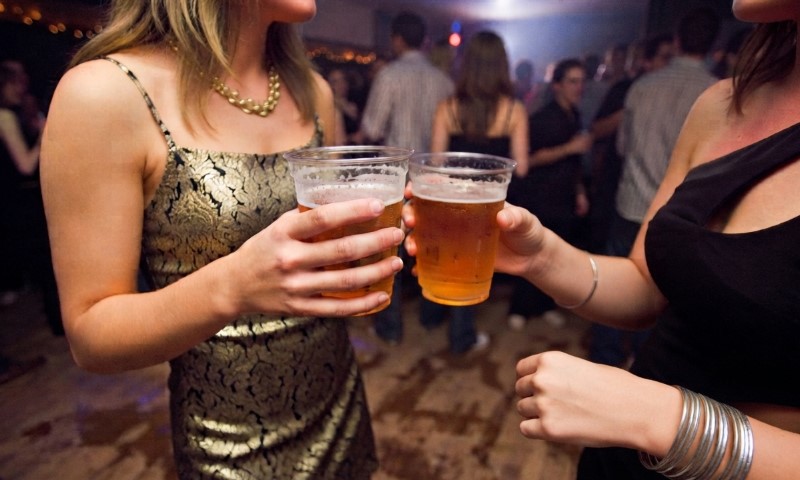
Fewer Americans identifying as drinkers is only part of the story.
Among drinkers in 2025, just 24% said they had consumed alcohol during the previous 24 hours. That was a record low.
Meanwhile, 40% said more than a week had passed since their last drink, the highest share recorded since 2000.
Amount consumed moved in the same direction. Drinkers reported an average of 2.8 drinks during the previous seven days. A year earlier, that average was 3.8. Current intake was the lowest recorded since 1996.
Health attitudes also lined up with behavior. Among people who considered moderate drinking unhealthy, 49% had consumed alcohol during the previous week. Among those without that concern, 69% had.
By 2026, only 13% of adults said they sometimes drink more than they think they should, another record low.
Put those numbers together and a more interesting picture appears. Declining alcohol use is not just about abstainers replacing drinkers. Some people who still drink may also be spacing drinks out, drinking on fewer days, or simply having less.
That is a more meaningful behavioral change than a new mocktail menu getting attention online.
Lower Drinking Rates Do Not Mean the Problem Is Solved
Good news can become misleading if it is allowed to do too much work.
Alcohol still contributes to about 178,000 deaths each year in the United States, according to the CDC.
Risky use also continues among a substantial share of people who drink.
In the 2025 National Survey on Drug Use and Health, 44% of Americans who drank alcohol reported binge drinking during the previous month. Roughly 10%, or about 14.5 million people, reported heavy drinking.
That category was defined as binge drinking on five or more days during the previous month.
So yes, fewer Americans are drinking. Yes, average use among drinkers appears to be falling too.
Neither fact tells us that people facing the greatest alcohol-related risks are stopping.
Population averages can make a health trend look cleaner than it really is. A national drinking rate can drop while millions of people still experience harmful use, dependence, injury, disease, or other consequences.
Public health progress is real only if fewer drinks on paper eventually translate into fewer serious harms in everyday life. That part cannot be assumed.
Why Are Americans Drinking Less?
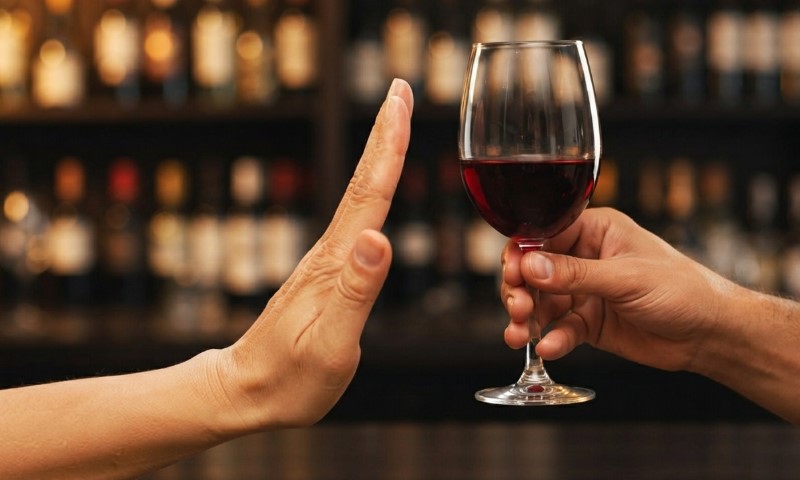
No single explanation fits the data neatly.
Growing concern about health is one obvious factor. More Americans now view moderate drinking as harmful, and people holding that view report lower recent alcohol use.
Cost may matter too. Higher alcohol prices can influence buying behavior, especially when households are already watching discretionary spending.
Policies intended to reduce harmful drinking may also play a role. So could changing social attitudes toward intoxication. Drinking heavily is not automatically treated as funny, normal, or socially required in every setting the way it once could be.
GLP-1 medications add another possibility. Emerging research suggests drugs in that category may reduce alcohol cravings for some people. Evidence is still developing, so treating weight-loss drugs as the explanation would be getting far ahead of what researchers can currently say.
Cannabis gets mentioned often as well. The idea is simple: maybe Americans are swapping alcohol for marijuana.
Available evidence makes that explanation less convincing as a complete answer.
Marijuana use had been relatively stable for several years when the alcohol decline accelerated, which makes a simple one-for-one substitution story difficult to support.
Mocktails, wellness culture, cannabis, medication, prices, health warnings, and generational change all make good standalone explanations because each gives people one neat cause.
Real behavior is usually messier.
Several pressures may be working at once, and their effects may differ by age, income, health status, social group, and drinking pattern. Trying to reduce the shift to one fashionable explanation risks missing what the data are actually showing.
Alcohol May Be Losing Its Default Status
One thing is certain: America is not becoming a nation of abstainers overnight.
Alcohol is still part of dinners, parties, sports, celebrations, dating, business events, and ordinary weekends. Millions of people still drink, and millions still drink at levels that can cause serious harm.
Yet the social default may be weakening.
Fewer adults now identify as drinkers. People who continue to drink report lower recent consumption. Health concerns are much more common than they were only a few years ago.
Most interestingly, the change is no longer confined to younger adults.
Having a drink increasingly looks like an active decision rather than something built into the occasion.
That may sound like a small cultural change. After decades when alcohol use sat comfortably above current levels, it is not.