



Six or seven in the morning is when a substantial share of Americans appear to begin their day. Work schedules, school commitments, commuting, and household responsibilities help explain why these hours feature so prominently in daily routines.
A 2022 survey involving 612 respondents found that approximately 53% reported waking at either 6 or 7 a.m., with 6 a.m. narrowly ahead.
Such findings are interesting, although they tell us considerably less about healthy sleep than headlines sometimes suggest.
A person’s waking hour reveals nothing about how long they slept, how frequently their sleep was interrupted, or how closely their schedule matches their biological clock.
So, if 6 and 7 a.m. are common wake-up times, does that make them the right hours to start the day?
What Time Do Most People Wake Up? A Look at the Numbers
View this post on Instagram
A December 2022 Health Digest readership survey asked 612 participants to identify their typical wake-up time.
Responses concentrated around two hours, although a substantial minority reported considerably earlier or later schedules.
Here is how participants answered:
Combined, 324 respondents, or approximately 52.9%, reported waking at 6 or 7 a.m. More participants selected 6 a.m. than any other individual time category.
Another observation deserves attention. Nearly one in five respondents reported waking at 5 a.m. or earlier, while 16.3% reported getting up at 9 a.m. or later.
Morning schedules are evidently not as uniform as their concentration around 6 and 7 a.m. might initially suggest.
How Reliable Are These Findings?
Before treating these percentages as typical American wake-up patterns, several methodological limitations deserve consideration.
A readership survey involving 612 participants is not equivalent to a nationally representative population study. Participants were not necessarily selected through probability sampling, and their ages, occupations, and employment schedules may differ considerably compared with those of the wider population.
More importantly, respondents reported their usual wake-up times without distinguishing workdays, weekends, or spontaneous waking.
Consequently, the figures cannot establish that 53% of Americans wake at 6 or 7 a.m. on weekdays. They establish that approximately 53% of one surveyed readership selected those hours as their typical waking times.
International reporting has also identified 7 a.m. as a prominent global waking hour. However, without sufficiently detailed information about sampling, participating countries, and measurement methods, such findings cannot establish a reliable worldwide average.
Differences in employment patterns, daylight hours, cultural habits, and local schedules complicate international comparisons.
A common wake-up hour is a useful descriptive finding, not a biological recommendation.
Why Do So Many People Wake Up at 6 or 7 a.m.?
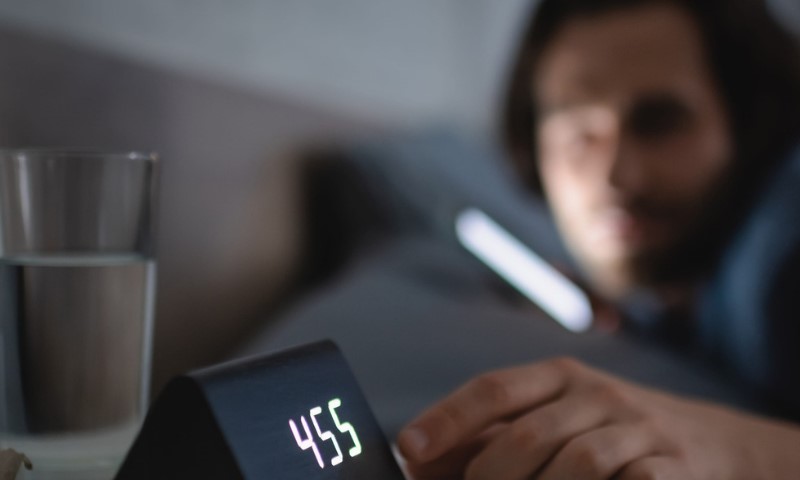
Modern schedules provide the most straightforward explanation.
Someone beginning work at 8 a.m. may need an hour or more to prepare, commute, and manage other responsibilities. Parents may face even earlier deadlines because school transportation and childcare arrangements operate on fixed schedules.
Early school schedules create another problem, particularly for teenagers whose biological clocks tend to favor later sleep.
Research on declining teen sleep suggests that adolescents are increasingly struggling to obtain sufficient rest, making an early school alarm considerably less straightforward than a simple matter of bedtime discipline.
Consequently, waking around 6 or 7 a.m. becomes a practical necessity for many households.
Such arrangements have a familiar history. Standardized working hours and institutional schedules have long influenced when people sleep, although biological preferences have never been equally convenient for everyone.
How Circadian Rhythms Influence Wake-Up Times
Human sleep timing is regulated partly by the circadian system, an internal biological timing mechanism operating on a cycle of approximately 24 hours.
A central clock in the brain, located in an area called the suprachiasmatic nucleus, coordinates daily physiological rhythms.
Light entering the eyes helps synchronize that clock with the external day. Melatonin production generally increases during the evening, while exposure to daylight helps promote wakefulness.
Sleep pressure operates alongside this circadian system.
As waking hours accumulate, a substance called adenosine builds up in the brain and contributes to the increasing need for sleep. During sleep, that pressure gradually declines.
Both mechanisms influence when someone becomes sleepy and when waking feels natural.
An important distinction is that individual circadian timing varies.
Morning-oriented individuals generally become alert earlier, while evening-oriented individuals tend to prefer later sleeping and waking schedules.
Age also matters. Adolescents commonly experience a shift toward later sleep timing, while older adults often develop earlier sleep patterns.
A 6 a.m. alarm might therefore suit one adult reasonably well while interrupting another person’s biological night.
When Work Schedules Conflict With Biology
Consider two employees who must report to work at 8 a.m.
One naturally becomes sleepy around 9:30 p.m. and wakes comfortably at 5:30 a.m. Another rarely feels sleepy before midnight but must also wake at 5:30 a.m.
Assuming both fall asleep promptly, their available sleep periods differ substantially.
First employee:
- Bedtime – 9:30 p.m.
- Wake-up time – 5:30 a.m.
- Available sleep window – 8 hours
Second employee:
- Bedtime – 12 a.m.
- Wake-up time – 5:30 a.m.
- Available sleep window – 5.5 hours
After five work nights, the second employee has scheduled 12.5 fewer hours for sleep than the first.
Actual sleep duration could be shorter for either individual because time in bed does not necessarily equal time asleep.
Such a comparison demonstrates an important problem with interpreting early waking as evidence of discipline or good health.
Identical alarm times can produce very different sleep outcomes.
Does Waking Up Earlier Mean Better Health?
No particular waking hour guarantees better health, alertness, or productivity.
A person waking at 5 a.m. after sufficient, uninterrupted sleep may function perfectly well. Someone rising at 8 a.m. after an equally restorative night may experience similar benefits.
Problems become more likely when early waking consistently reduces total sleep duration.
According to the CDC’s adult sleep duration recommendations, adults aged 18 to 60 generally need at least seven hours of sleep per night. Adults aged 61 to 64 are advised to obtain seven to nine hours, while those aged 65 and older generally need seven to eight hours.
Individual requirements vary, and duration alone does not establish sleep quality.
What Time Should You Go to Bed If You Wake Up at 6 or 7 a.m.?

A simple calculation provides a more useful starting point than selecting an arbitrary waking hour.
| Wake-up time | Bedtime for 7 hours | Bedtime for 8 hours |
| 5 a.m. | 10 p.m. | 9 p.m. |
| 6 a.m. | 11 p.m. | 10 p.m. |
| 7 a.m. | 12 a.m. | 11 p.m. |
| 8 a.m. | 1 a.m. | 12 a.m. |
These calculations assume immediate sleep onset and no nighttime awakenings. In practice, people generally need additional time in bed to obtain the intended amount of sleep.
For example, someone who wakes at 6 a.m. and requires approximately 20 minutes to fall asleep would need to be in bed by around 9:40 p.m. to allow eight hours of actual sleep, assuming no other interruptions.
Such calculations do not determine an ideal bedtime for everyone. They do, however, reveal an elementary problem with early-alarm advice.
Moving the alarm earlier without adjusting bedtime reduces the opportunity for sleep.
Why Consistency and Morning Light Matter

Regular sleeping and waking times help synchronize circadian rhythms, making it easier for the body to anticipate sleep and wakefulness.
Morning daylight provides another important signal.
Exposure to light shortly after waking can help reinforce an earlier circadian schedule, while excessive bright light late in the evening can delay biological preparation for sleep.
Timing matters because light exposure can shift circadian rhythms in different directions. Morning light generally favors earlier timing, whereas evening light can favor later timing.
For someone attempting to establish an earlier routine, a reasonable approach involves gradually adjusting bedtime and wake-up time, maintaining a consistent schedule, and obtaining daylight after waking.
However, people with persistent insomnia, shift-work difficulties, or suspected circadian rhythm disorders may need individualized assessment rather than simply stricter alarm habits.
Another issue frequently overlooked is the difference between waking naturally and being awakened by an alarm.
An alarm can interrupt sleep at a fixed time regardless of biological readiness.
Natural waking may indicate a more suitable schedule, although it does not automatically guarantee adequate sleep.
Persistent daytime sleepiness, difficulty concentrating, and regularly needing considerable extra sleep on days off may indicate that current sleep habits deserve closer attention.
Common Doesn’t Mean Optimal
Six and seven in the morning appear to be common wake-up times, particularly among people organizing their days around conventional employment and family responsibilities.
Available survey evidence supports that general pattern, although it is insufficient to establish a definitive national or global waking hour.
More importantly, population averages provide little guidance about an individual’s ideal sleep schedule.
A healthy waking routine depends more on adequate sleep duration, consistency, sleep quality, and circadian alignment than on the particular number displayed on an alarm clock.
Six or seven in the morning may be when much of the working world begins its day. That does not mean the body’s internal clock has necessarily agreed to the arrangement.