

Getting older is supposed to mean needing less sleep, right? Plenty of Americans seem to believe that, especially when they compare their current sleep habits with how easily they slept in their 20s.
Actual data tells a more complicated story.
According to CDC data collected in 2024, 34.5% of Americans ages 50 to 64 sleep fewer than seven hours per night on average, compared with 30.5% of all adults. That puts people approaching retirement ahead of every other adult age group when it comes to short sleep duration.
Here’s the interesting part. Adults 65 and older report considerably less short sleep, even though aging is frequently associated with poorer sleep quality.
So what’s happening during those middle years? Are people naturally sleeping less, or are responsibilities, stress, and health changes making adequate rest harder to achieve?
What the CDC Data Reveals About Sleep and Age
CDC findings published in April 2026 show a pattern that challenges the assumption that sleep duration simply declines with age.
Here’s how frequently Americans in different age groups reported sleeping fewer than seven hours in 2024.
| Age group | Sleeping under 7 hours |
| 18-34 | 27.2% |
| 35-49 | 33.4% |
| 50-64 | 34.5% |
| 65+ | 27.2% |
| All adults | 30.5% |
Short sleep becomes increasingly common through middle age before dropping among adults 65 and older.
People ages 50 to 64 were 7.3 percentage points more likely to report short sleep than adults 65 and older. In relative terms, that’s approximately 27% higher.
Another finding makes the situation more interesting. Some 22.3% of adults ages 50 to 64 reported difficulty staying asleep most days or every day, compared with 12.7% of adults ages 18 to 34.
Falling asleep and staying asleep are different problems. Someone might go to bed at 10 p.m., fall asleep immediately, and still struggle to get seven hours because they wake repeatedly during the night.
One important limitation deserves attention. CDC figures rely on self-reported sleep duration, rounded to whole hours, rather than measurements collected through overnight sleep studies.
Consequently, the numbers describe reported sleep habits, not the prevalence of diagnosed insomnia or sleep apnea.
Why People in Their 50s and Early 60s May Be Sleeping Less
Consider what life often looks like at 55.
Someone might be working full-time, helping an aging parent, supporting a college-age child, and trying to keep retirement savings on track. Even without a diagnosed sleep condition, finding eight uninterrupted hours can become difficult.
Several factors may contribute to shorter nights during this period.
- Work and financial pressure – Demanding schedules, retirement planning, and household expenses can reduce time available for sleep.
- Caregiving responsibilities – Supporting children, older relatives, or both can create unpredictable schedules and nighttime interruptions.
- Menopause – Hot flashes, night sweats, and hormonal changes can interfere with sleep continuity.
- Chronic health conditions – Pain, nighttime urination, and certain medications can interrupt rest.
- Sleep apnea – Repeated breathing interruptions can fragment sleep and contribute to daytime fatigue.
Stress adds another complication. A person might have enough time in bed but spend part of the night worrying about responsibilities waiting the next morning.
Sleep problems also belong to a wider conversation about everyday exhaustion. Recent federal data found that 20% of American women report frequent exhaustion, compared with 13% of men. Poor sleep may contribute to fatigue, although the figures don’t establish how much of that difference is connected to sleep duration.
None of these explanations was established as the cause of the CDC age pattern. Survey results identify who reports short sleep, not why it happens.
Still, the distinction matters in everyday life.
Telling someone to go to bed earlier sounds reasonable until their main problem turns out to be waking at 3 a.m. every night.
Sleep advice becomes more useful when it addresses the actual interruption rather than simply repeating the recommended number of hours.
Is Sleeping Under Seven Hours Actually Dangerous?
Seven hours is a useful benchmark, but it isn’t a magic boundary separating healthy sleep and unhealthy sleep.
Someone regularly sleeping six hours and 45 minutes isn’t necessarily experiencing the same health risks as someone sleeping four hours.
Research suggests that duration matters, particularly when short nights become a long-term habit.
A 2022 Whitehall II study followed participants over approximately 25 years and examined associations between sleep duration and multiple chronic diseases.
Among participants assessed at age 50, sleeping five hours or less was associated with a 30% higher risk of developing multiple chronic conditions, compared with sleeping seven hours, after statistical adjustments.
Researchers examined conditions including diabetes, heart disease, and cancer.
However, an association doesn’t establish that insufficient sleep directly caused those illnesses. Other health and lifestyle factors may influence both sleep duration and disease risk.
More recent research published in 2026 examined sleep duration and biological aging indicators. Researchers found that approximately 6.4 to 7.8 hours of sleep was associated with the lowest biological age gaps across different organs and biological measures.
That range wasn’t identical for everyone, and the findings don’t establish a personalized sleep prescription.
What about people who claim they function perfectly on four hours?
Rare genetic differences allow some natural short sleepers to feel rested with approximately four to six hours. But that doesn’t mean the average adult can train their body to need substantially less sleep.
Feeling accustomed to exhaustion and genuinely functioning well are two different things.
What Adults Over 50 Should Actually Pay Attention To
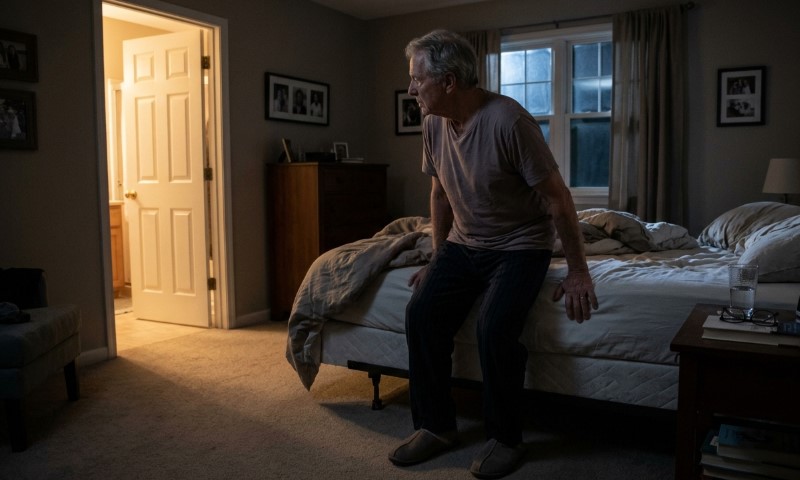
For most adults in their 50s and early 60s, seven to nine hours is a reasonable sleep target. Recommendations generally shift to seven to eight hours after age 65.
But duration shouldn’t be the only measure of sleep health.
Someone consistently getting seven and a half hours but waking exhausted may have a bigger problem than someone sleeping slightly less and feeling alert throughout the day.
Instead of obsessing over a specific number, focus on a few practical questions.
- Are you waking repeatedly during the night?
- Do you feel rested when you get up?
- Are you struggling to stay awake during ordinary daytime activities?
- Has your sleep changed noticeably over recent months?
- Does someone notice loud snoring, gasping, or pauses in your breathing?
Answers can help identify problems that deserve closer attention.
For example, consider a 58-year-old who spends eight hours in bed but wakes several times nightly and regularly feels tired at work.
Simply moving bedtime earlier might accomplish very little.
Tracking sleep patterns for two weeks, including awakenings, caffeine intake, alcohol consumption, and daytime fatigue, could help reveal possible triggers and give a healthcare professional more useful information.
Consistent bedtimes, a cooler bedroom, and limiting late-day caffeine may help when habits or environmental conditions are contributing to poor sleep.
Persistent insomnia may require cognitive behavioral therapy for insomnia, often called CBT-I, rather than another round of generic sleep tips.
Frequent loud snoring, breathing pauses, or substantial daytime sleepiness also warrant medical evaluation, particularly when sleep apnea is suspected.
And about those sleep trackers?
Consumer devices can help identify changes in sleep timing, but their sleep-stage estimates and health scores shouldn’t be treated as medical diagnoses.
A low score isn’t automatically a medical emergency. A high score doesn’t guarantee that sleep is restorative.
Midlife Sleep Problems Deserve More Attention
Americans ages 50 to 64 report the highest prevalence of sleeping fewer than seven hours, but the finding shouldn’t be interpreted as proof that middle-aged adults naturally need less rest.
Work schedules, caregiving demands, hormonal changes, and sleep disorders may all play a role, although the CDC data cannot determine their individual contributions.
What’s particularly revealing is that short sleep becomes less common after age 65, suggesting that age alone offers an incomplete explanation.
Seven hours is a useful starting point, not the whole story.
For middle-aged adults consistently falling short, a more productive question is what keeps interrupting their sleep and what can realistically be changed to make those nights better.